
Not Enough Bone for Upper Implants?
Have you been told there is not enough bone for upper implants? Hearing that you may not qualify for upper implants can feel discouraging, but it’s more common than you might think—and importantly, it’s not the end of your journey.
Many patients experience bone deficiency in the jaw, which can affect overall dental implant suitability. However, with proper jawbone evaluation and a comprehensive dental assessment, dentists today can explore a wide range of implant treatment options related to dental implants without bone and alternative implant solutions.
Not Enough Bone For Implants: The Problem
One of the most common challenges patients face is an insufficient jawbone, which creates dental implant limitations. This often happens due to bone loss in the jaw, making standard implant procedures difficult, which is why understanding dental implant limitations and implant candidacy is essential.
Your implant candidacy depends heavily on the presence of adequate bone. A jawbone deficiency can impact overall treatment suitability, especially when the bone volume requirement for implants is not met.
How Come I Have Not Enough Bone For Implants?
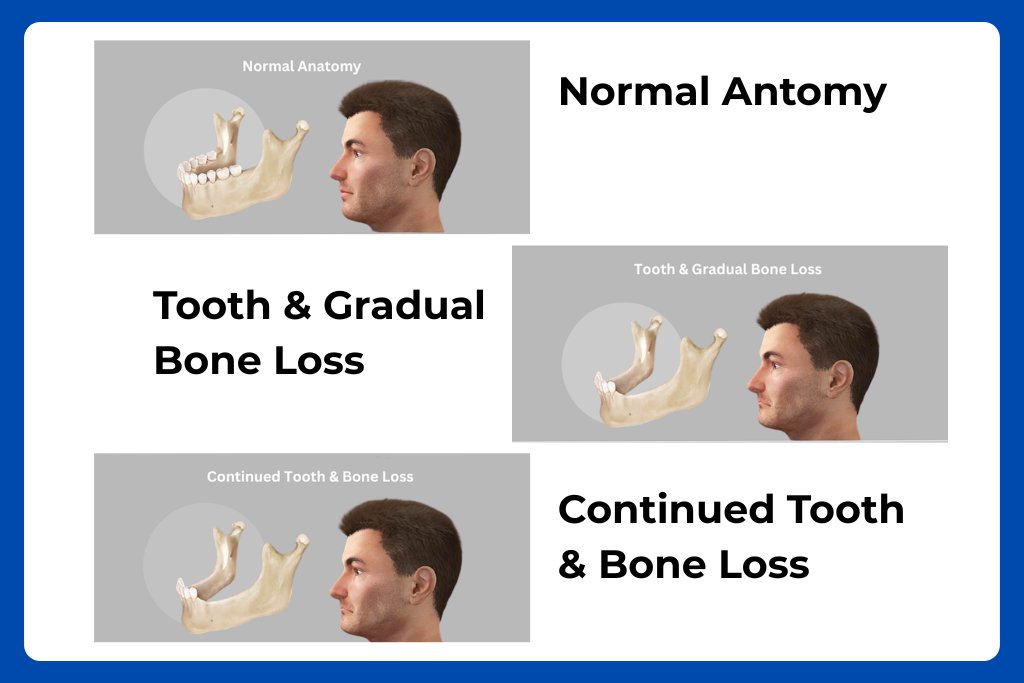
There are several reasons why jawbone loss occurs. One major cause is bone atrophy, which happens when the jaw is not stimulated after tooth loss. The tooth loss consequences go beyond aesthetics—they directly affect bone health, often requiring attention through tooth loss consequences and bone preservation strategies.
Patients who rely on dentures may experience dentures and bone resorption, especially with long-term denture wear, leading to noticeable facial structure changes. Additionally, gum disease bone loss and infection-related bone loss can weaken the jaw significantly.
In the upper jaw, maxillary bone reduction is quite common, often resulting in overall jaw shrinkage.
What Can Be Done?
With modern implant techniques and proper management of bone loss, patients can still achieve highly successful and long-lasting results. Even in more complex cases, today’s dentistry offers reliable solutions that can restore both function and appearance.
In such situations, consulting a Dental implant expert in Dubai like Dr. Suhail Syed is highly recommended. He is a highly experienced Oral Implantologist in Dubai with over 15 years of clinical expertise and is currently practicing at Dental Hub Clinic in Al Barsha, Dubai, where he focuses on advanced and personalized implant treatments.
All On 4 Plus ®
One of the most effective solutions available today is a full arch implant solution like All-on-4 Plus®. This approach allows for immediate fixed teeth using an advanced implant system, even in cases of a severely resorbed jaw, making it a preferred choice in full mouth restoration and implant-supported teeth.
It is often a graft-free implant solution, making it ideal for patients seeking full mouth restoration with stable, implant-supported teeth.
1. Graft Free Solutions
For patients with severe bone loss, graft-free implants offer a powerful alternative. These include immediate loading implants, which can function soon after placement. In cases of a severely resorbed jawbone, techniques like zygomatic implants use cheekbone anchorage to bypass weak areas. These maxillary deficiency solutions improve implant stability in low bone while supporting full arch support systems and modern denture replacement options, often used in severe bone loss treatment and advanced implant reconstruction options.
2. Sinus Elevation
When dealing with upper jaw bone loss, a sinus lift procedure may be recommended as part of bone augmentation procedure and implant preparation surgery. Through maxillary sinus expansion and sinus floor elevation, dentists focus on bone foundation creation and proper implant site enhancement. Advanced tools like the piezosurgery bone technique allow precise implant site enhancement, often followed by delayed implant placement for optimal healing.
3. Bone Grafting
Another common solution is bone regeneration, achieved through bone augmentation techniques. This helps with missing jawbone reconstruction and implant site strengthening, commonly included in bone regeneration surgery and implant site reconstruction. Dentists may use an autogenous bone graft, allograft bone material, xenograft bone material, or a synthetic bone graft, depending on the case. Techniques like guided bone regeneration and socket preservation ensure long-term success.
Dental Implants Without Bone: What Are My Options?
If you’ve been told you need dental implants without bone, don’t worry—there are still effective alternatives to dental implants and solutions available. These approaches are designed for severe bone loss treatment and include advanced implant reconstruction options.
If You Are Missing Bone, There Are Two Main Options:
Patients generally have two implant treatment pathways: preserving existing bone or rebuilding it. Both involve bone preservation strategies and tailored implant rehabilitation options, depending on whether surgical vs grafting approaches are needed.
1. Dental Implants Utilizing Existing Bone
In some cases, dentists can focus on existing bone utilization using minimally invasive implants. These methods rely on graft reduction techniques and strategic implant anchorage strategies, often seen in minimally invasive implants and advanced placement techniques.
- For Upper Jaw Bone Loss: Patients with upper jaw bone loss may benefit from maxillary implant solutions that use alternative anchorage sites and advanced implant positioning.
- For Lower Jaw Bone Loss: For lower jaw bone loss, dentists consider mandibular implant solutions while accounting for nerve area limitations. Proper implant positioning strategies must align with jaw anatomy constraints.
2. Bone Grafting for Dental Implants
A bone grafting procedure is often recommended for rebuilding lost bone. This involves bone regeneration surgery and implant site reconstruction to support implants, improving outcomes through jawbone strengthening and implant support enhancement.
Solutions for Jawbone Loss & Implants
Modern jawbone loss solutions focus on restoring dental implant stability and improving implant foundation strength. Ensuring proper bone support for implants is key to achieving full smile restoration.
Why is the Jawbone so Important For Dental Implants?
The jaw plays a critical role in providing jawbone support and ensuring implant stability. Successful implants depend on the osseointegration process, where the implant integrates with the bone.
What is Osseointegration?
Osseointegration refers to the bone integration process where there is complete implant fusion with bone. This biological implant bonding ensures long-term implant stability.
FAQs
Conclusion
Not having enough bone for upper dental implants is a common concern, but it does not mean that implant treatment is impossible. Today’s advanced dental techniques have made it possible to treat even severe bone loss cases with predictable and long-lasting results. With proper diagnosis, careful planning, and the right treatment approach, patients can still restore full function, stability, and a natural-looking smile.
Depending on the condition of the jawbone, treatment options such as bone grafting, sinus lift procedures, or advanced graft-free solutions like All-on-4 and zygomatic implants may be recommended. Each case is different, which is why a detailed evaluation by an experienced implant specialist is essential.
If you are a resident of Dubai or planning to move to Dubai and are looking for expert care for artificial tooth replacement in Dubai, consulting an expert like Dr. Suhail Syed can help you choose the most suitable treatment options for your specific condition. He is a highly experienced Oral Implantologist practicing at Dental Hub Clinic in Al Barsha, Dubai, with over 15 years of clinical expertise in advanced implant dentistry.
With the right specialist and treatment plan, even patients with significant bone loss can successfully regain confidence, function, and a healthy smile.
Website: dentalimplantdubai.ae
Address: Dusseldorf Business Point, 201, Dental Hub Clinic – Al Barsha 1, Dubai, UAE